

Investing: start today, benefit tomorrow
, 4 minutes
A study conducted in November 2025 by the University of Lucerne reveals that over half of all people in Switzerland do not invest. One reason for this is fear of fluctuations on the stock markets. A lack of knowledge of financial topics often also plays a part. At the same time, many people are concerned by financial insecurity in old age. This is precisely where a targeted investment can be an effective way of countering this concern. A well thought-through investment strategy can help to preserve and increase wealth over the long term as well as sustainably strengthen financial security in old age. Andrea Boog, Private Banking Client Advisor, explains in an interview how Zuger Kantonalbank can support its clients in developing a structured investment strategy.

Image: © Adobe Stock, contrastwerkstatt
Andrea, the fear of price fluctuations or even losses when investing is a key topic for many people. How do you relieve your clients of this worry?
I can completely understand this concern. Nobody likes to invest with a bad feeling, and nor should they. What’s important when investing, however, is to take a long-term view. Short-term fluctuations are normal and are part of the process; over the long term, though, they offer much better earnings opportunities compared to parking money in a savings account. For wealthy clients in particular, a structured, professionally supported investment strategy is key to not only maintaining but also developing wealth in a targeted manner.
Why is it important to have a structured investment strategy from the outset?
Having a structured investment strategy early on creates clarity and serves as a guide. It helps people to define financial goals realistically, to be aware of and manage risks, and to view market fluctuations in a more relaxed way. People who invest early on benefit from the compound interest effect in the broader sense: earnings from shares and funds are reinvested systematically and thus raise the baseline for future growth. Over time, this effect reinforces the assets’ performance.
Market fluctuations are inevitable. How do you distinguish between short-term fluctuations and real risks?
The difference between normal market fluctuations and real risks is key. Short-term fluctuations are normal and can be cushioned by broad diversification. We identify real risks such as a one-sided investment in uncertain markets or illiquid products early on and actively manage them. In this way, we protect assets over the long term and ensure that they can grow steadily.
Why is it worthwhile to invest actively and not only to rely on safe but low-yielding investments?
Purely low-risk investments offer security but often mean that assets can grow only slowly. Opportunity-driven, proactive investments allow people to use market potential to develop their assets in a targeted way and achieve their personal financial goals more efficiently. Of course, we always take account of our clients’ individual risk capacity and risk tolerance.
Which strategic errors do you frequently observe among wealthy investors, and how could these be avoided?
The most frequent strategic errors include portfolios that are not well balanced, insufficient diversification and short-term investment decisions as a reaction to market developments. These can be avoided by structuring assets clearly, opting for broad diversification and gearing investments systematically to long-term goals. Professional support provides discipline in the decision-making process and creates the basis for building up assets over the long term.
How do you specifically support your clients in developing a targeted investment strategy?
When developing an investment strategy, I make sure that I understand the individual situation, goals and risk tolerance of each client. On that basis I draw up a customised strategy, actively oversee its implementation and amend it continuously. That way, the focus is always on the client’s needs.
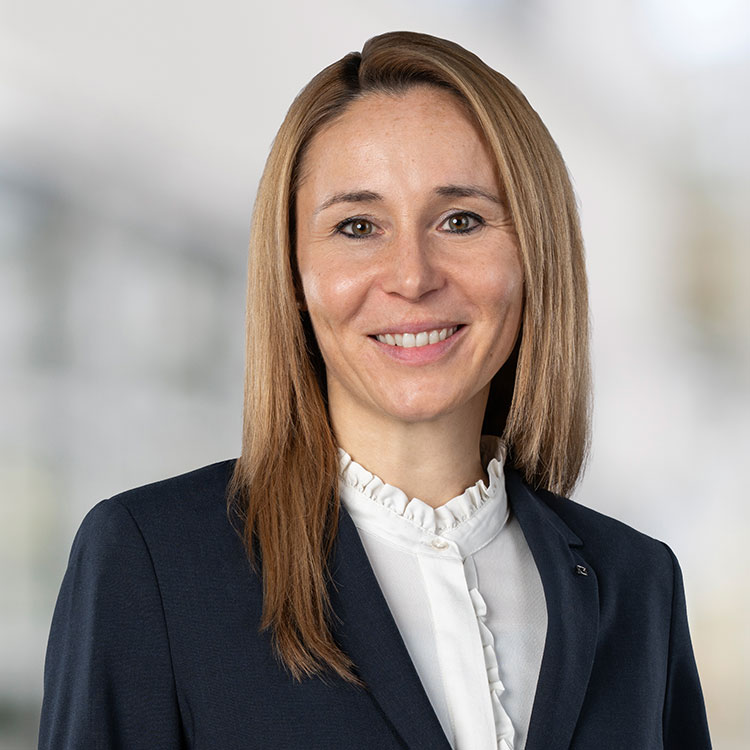
“Successful investing often only reveals its true effect over time – patience pays off in the long term.”
Andrea Boog, Private Banking Client Advisor at Zuger Kantonalbank
*Source: Lucerne University of Applied Sciences, study “Anlegen und Vorsorgen in der Schweiz – eine ganzheitliche Betrachtung” (Investment and Pension Planning in Switzerland – a Comprehensive Overview), 2025

Sara Gonçalves
Until July 2026, Sara Gonçalves worked as a university intern at Zuger Kantonalbank,
assisting the Marketing and
Communication team. Her tasks included organising events, working in the social media field and writing blog
articles. In her free time, Sara likes being outside in the countryside or doing things together with friends and family.
Travel is also one of her passions. She has already visited many impressive places around the world that she finds
amazing.